


Sustainable Move
Monday 28 November 2010 Our planet relies on a delicate balance in which every living being has a role to play and exists only through the existence of another being. This fragile equilibrium is being placed under ever increasing pressure as we continue farming resources to meet our consumerist lifestyles. The ocean has always been viewed as a bottomless resource but the reality is that marine resources are finite.
{youtube}4Qyo3fn-w_M{/youtube}
Covering 70% of the Earth’s surface, the ocean provides us with tremendous and often unseen economic, social and cultural benefits; it acts as a vast highway for commerce, it provides a place for recreation and most importantly, it supplies food or income for 2.6 billion people worldwide. That is almost half the world’s population who rely specifically on the ocean for their livelihood.
Today, however, commercial fishing has in many cases left in its wake dangerously depleted fish stocks and an ecosystem whose balance has been sufficiently tipped to jeopardize the existence of a number of key species. This is why overfishing has become one of the most critical issue facing the world’s oceans today.
The alarming facts associated with overfishing speak for themselves:
• Almost 80% of the world´s fish stocks are either over exploited or exploited to their maximum.
• 90% of predatory fish have already been fished out.
• No fishing gear is completely selective. As a result, many non-target fish or endangered species of albatrosses, sharks and turtles are accidentally caught as bycatch.
• Globally, it is estimated that approximately quarter of what is caught is thrown back, often dead, and wasted.
• 300 000 seabirds and 250 000 turtles are killed by fishing each year.
• Some fishing techniques pose a threat to marine habitats which are the life support system for marine life.
Most alarmingly of all, the majority of consumers are not even aware of the crisis. But, there is a solution if we act collectively.
The WWF’s Southern African Sustainable Seafood Initiative (SASSI) has been established with the primary objective of creating awareness around marine conservation issues whilst guiding consumers towards more environmentally friendly choices when choosing seafood. SASSI is in an influential position to provide practical solutions as they are placed at the interface between civil society, the private sector and government. The program has the unique ability to work across the seafood supply chain to address this challenge in the holistic manner required.
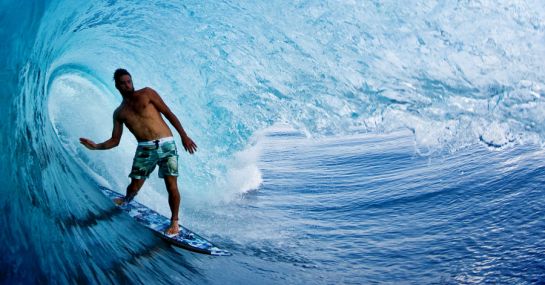
From boardshorts through t-shirts to boxers, Billabong has a range of garments, which have been developed from environment-friendly fabrics and fibres to lesson the impact on the environment and create greater awareness of our responsibility to preserve the planet. Together with WWF’s SASSI, we are encouraging consumers to extend their care to the environment this season – for every Billabong Eco Friendly garment sold, R5 will be donated to WWF’s SASSI and ultimately contribute towards keeping our oceans in balance.
Billabong has partnered with WWF’s SASSI this summer to make more consumers aware of the crises and to advocate informed choices to effect change, collectively. “We are really proud of our collaboration with WWF’s SASSI and admire the work that they’re doing. As a youth inspired brand, we believe that Billabong can play a catalyst role in mobilizing youth to make better informed choices. The relevance being; ultimately they are the generation who will face the consequences of the past decades.” Says Gerard du Plessis, Strategic Marketing Manager for Billabong South Africa.
Above all, Billabong aims to create awareness around our responsibility to keep our oceans in balance. In addition to affecting the livelihood of billions of people, the long-term effects of overfishing will also influence the way we interact recreationally with the ocean. As surfers and custodians of the sea, there is no cause more relevant and indeed prevalent than that.
It is critical that we effect change.