


Surfer's Ear
Monday 28 February 2011 Surfer's Ear is one of the most feared conditions that many surfers must face at some point in their lives. Dr John debunks the myths and dispells the fears around what this slow-growing condition really means, including the risk that you face when you eventually have to go under the knife. But first, the non-surgical type.
There are two kinds of surfer’s ear. Ironically, one can be very painful but does not need surgery, so you can relax for now while we deal with the painful one first. We’ll deal with the one that needs surgery next time.
The ear
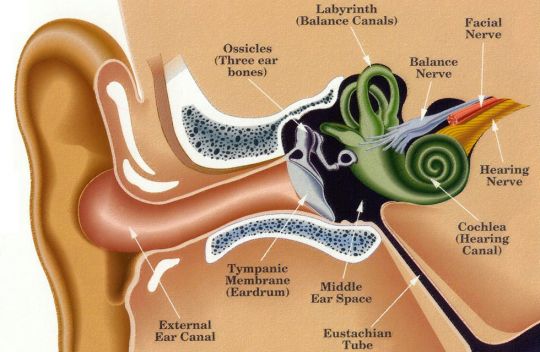
This is not a strong point among the surfing fraternity ... hence significant misunderstanding. The outer ear, the pinna (the one that animals can waggle to improve their sense of hearing) is made of cartilage. The outer ear extends into the first half of the canal leading to the eardrum.
Like all parts of the body, it has a definite function. There are hairs, which help protect, and oil glands to lubricate the skin. This outer ear area is different to the second part of the ear canal, which is bone with thin skin over it. The eardrum lies between them.
The top layer cells of the eardrum migrate outwards along the canal. A natural process. Wax is formed by a combination of these cells and the oil. This has very significant protective qualities and doesn’t need ritual removal unless it's causing blockage. So, hands off the wax unless it's causing concern.
The painful surfer's ear
The skin of the outer canal is tightly attached to the underlying cartilage. Hence any increase in pressure due to infection and swelling, causes significant pain. You know what I mean. You touch the outer ear and it's damn painful. The canal's also swollen, so in addition to the pain, you're now hard of hearing. And there can be some discharge.
When your Doc looks in the ear the canal is swollen and one can't even see the eardrum. This is an infection. Some are very prone to it ... especially those swimming in fresh water ... less so in the sea. But surfers aren't excluded.
It can simply be that the ear doesn’t like the water you're swimming in, or else you can get a bacterial infection, and recall the water you swim in is, in certain cases, filled with bacteria of a nasty kind. Those are often related to the bowel ... and a not infrequent cause of the infection.
Treatment is primarily focused on reducing the swelling, which causes the pain ... which can be severe.
Treatment
There are varying approaches. As an ENT surgeon I've got a high-powered microscope, which lets me see exactly what's going on. This is not something your General Practitioner has. One sucks away as much debris as possible and then if the canal is not too swollen, eardrops containing antibiotic and Cortisone are put in the ear. Four drops twice or three times a day. Sofradex, Ciloxon, Cilodex Covomycin D, Otosporin and Betnesol N are all very similar drops available. You need a prescription.
But having said that, in many cases the canal is so swollen, the drop has no way of getting in. In these cases one puts in a strip of ribbon gauze impregnated with a Cortisone antibiotic combination ... Quadriderm ... and feeds it into the entire canal.
This again is something which we ENT's are used to doing. This usually is not enough. In my hands, the most effective treatment, in addition to the Quadriderm wick, is oral Cortisone. Don’t blanch. This is simple stuff, it's also very cheap. It's in and out of your body in 24 hours and has a purely anti-inflammatory effect. So it takes down the swelling very quickly and literally within 24 hours the surfer is much improved. I rarely need to use an oral antibiotic.
The wick comes out on its own, usually the next day. The eardrops continue for a week or 10 days and the ear usually settles completely. It will never damage your hearing.
Is it possible to protect against the painful surfer's ear? Yes, but it doesn’t work with all people. Some are just prone to it.
Keeping water out of the ear is often impossible but what you can do is put in drops such as Swimseal ... 4 drops before you go into the water. Peter Desmarais, a great friend of mine, and a superb ENT surgeon in Durban, invented it. He's also trained as a pharmacist. There are other alcohol-based drops. The bottom line is to try and keep the ear dry.
Earplugs can be useful, but as we all know there's no perfect one. The Docs pro plugs are well known and the most popular. Some find that good old-fashioned Prestik is what works for them. There are a variety of plugs. Each claiming to be miraculously good but of course that’s the usual bumf one reads. You need to find one that works for you.
Regards treatment, recall the bottom line is to get swelling down. Routine antibiotic orally is not necessary in the vast majority of cases and, I repeat, for me I find a short sharp course of oral Cortisone, which is absolutely safe, together with the ear wick, the quickest way to get one's surfing mate back in the water as soon as possible.