


Shark Chum Warning
Tuesday 10 April 2012 A wildlife author is up in arms over a permit that allows five tons of chum to be dumped in False Bay for a US reality show called “Shark-Men” off Seal Island between the 10 and 30 April. Er ... that means from today.
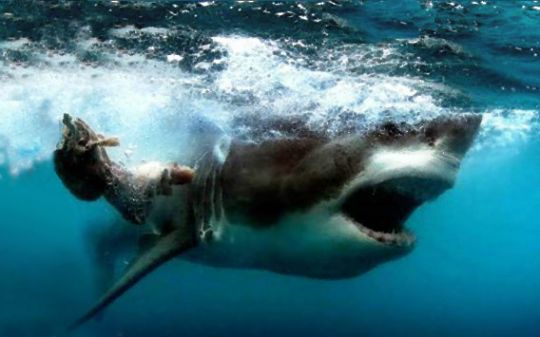
According to a press release by Dr Dirk Schmidt, of the White Shark Interest Group, a permit for the crew and researchers working for National Geographic to operate in the bay has been provided by Dr. Alan Boyd, Director of Biodiversity and Coastal Research – Environmental Affairs, without consultation of the local community.
Dr Schmidt, who is a wildlife photographer and the author of two books on Great White Sharks, says: "In discussion with the Mr. Fisher (Fisher Productions/National Geographic) and his crew, up to 5 Tons (5,000 kg) of Tuna has been loaded, which is to be used for baiting and chumming. The use of possible whale meat or blubber has not been denied. This is in stark contrast to the local shark cage diving operators, which are limited to a maximum of 25 Kg of fish products per day.
"The operating procedure for the capture of Great Whites includes actively attracting sharks to the ship and its support vessels, for scientists to select an appropriate “research” shark, which is then hooked, tired and exhausted to present less danger to the fishing crew and researchers, loaded on a submersible platform and raised out of the water. The shark remains on the platform for up to 20 minutes during which a number of tests are performed, including body cavity implants, blood sampling and a satellite tagging. After the various procedures are completed it is floated back into the water.
"Whilst this is done under the ambit of “television research” with the blessing of Environmental Affairs and local researchers, serious concern arises from a number of issues.
"The close proximity to Muizenberg, winds and currents may take the chum slick inshore. An increased number of White sharks may be attracted from outside the bay to the Seal Island area due to the active chumming operation over an extended period of time.
"Captured sharks are exhausted, stressed and disorientated after their ordeal, some initial tracking data released of other areas, suggests that “post-surgery” sharks leave the immediate area. Due to Seal Island lying in a horseshoe shaped bay, sharks may end up near Muizenberg and other popular beaches.
"This may lead to possible increased shark-human interactions. A sharp increase in the number of White Sharks may be noted during and after the filming has been completed, as these sharks, initially attracted by volumes of chum to the Seal Island area, find their way around the bay. The dispersal of a massive chum slick, given on-shore winds, may further increase the number of inshore sharks which cruise the chum slick in search of food.
"I believe it to be prudent, and as a preventative measure, that a high shark alert is issued and maintained during, and for several days after, the filming activity. Unusual White Shark behavior and an increased presence and possible shark-human interaction or even attacks - cannot be excluded.
"In the event of a shark attack, we need to question, who will be held accountable, Dr. Boyd for issuing the permit, National Geographic and Fisher productions for baiting and chumming, the researchers for supporting the project?"
Concerns may be directed to the Director of Biodiversity and Coastal Research – Dr. Alan Boyd at email: ajboyd@environment.gov.za , or National Geographic tkelly@ngs.org, or dedelson@ngs.org