


SA Charges World Games
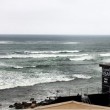
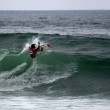
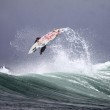
Thursday 20 October 2010 PUNTA HERMOSA, Peru: Two sets of scaffolding, one on either side of the rocky bay of Punta Hermosa, enabled organisers to run simultaneous heats as 4-7 foot waves lit up Day 1 of the Billabong ISA World Surfing Games this morning.
{youtube}_lvGLNBo7vw{/youtube}
The challenge for the gold medals in Men’s, Women’s, Longboard, Tag team and the overall Team trophy got underway at Senoritas and Caballeros, with Team South Africa completing a confidence-building clean sweep, winning all six of the heats they contested in the “Olympics” of surfing which features national teams from 31 nations and over 200 competitors.
A chilly sideshore south-southwest wind kept the skies grey while the ocean delivered a chunky southwest swell. Host country Peru won fiv out of six heats with one second place showing - much to the delight of the local crowd. Costa Rica (last year’s host) won all six heats for a clean sweep. New Zealand, Puerto Rico, and Venezuela all performed well. The crack Australian team looked formidable, with five current or former pros included in their team.
“The Australians were definitely the dominant performers out here early on,” noted Mike Parsons, a former World Tour surfer, big wave legend and commentator for the event. “At Senorita’s there was nobody close.” At Caballeros, across the bay on the rights, Team USA swept all six of their heats as well.
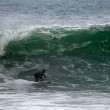
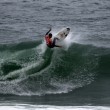
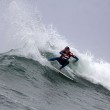
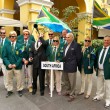
The South Africans were matched against surfers from Ecuador, Guatemala, Uruguay and the UK.
Warwick Wright was the first SA surfer to take to the surf and the 2002 ISA World Junior champion set the standard by posting the first double-digit heat total of the event, scoring 12.0 points out of a possible 20 in winning Heat 4.
Chad du Toit (13.06) and Casey Grant (12.27) also recorded comfortable victories in their respective encounters before team captain Greg Emslie delivered 13.67 points in Heat 32, the last of the day, to join his compatriots in Round 2 of the Qualifying stream in the double elimination format used at the event.
>In the women’s division, Chantelle Rautenbach’s 14.60 point total was too good for her opponents from Ecuador and the UK to match while Stacey Guy triumphed in her wave-starved, low scoring heat to stay on track for higher honours.
Last year Team USA took the team gold medal -- only the second gold for America since 1996, when the ISF became the ISA and Fernando Aguerre took over as president. This time around Team USA, headed by Coach Ian Cairns, is considerably younger and a bit less experienced.
In the a field of 31 nations there was plenty of talent and in the opening rounds a slew of teams won heats. France and Brazil (perennial powerhouses in the surfing world) moved several members into the next round.
But many other smaller nations also charged the intermittently strong wave sets to push their teams up the ladder. Great Britain’s Micah Lesler and Gilbert Brown of Costa Rica both took firsts. Mexico’s Jose Trujillo won his heat as did Santiago Muñiz who is surfing for Argentina but actually lives in Brazil.
“It’s crazy because I was born in Mar del Plata (Argentina) but moved to Brazil when I was three months old, where I’ve lived for the rest of my life,” Santiago explained when asked about both being Argentinean and Brazilian. “It’s strange because my brother competes for Brazil and I compete for Argentina. I compete against my friends and now we’re rivals from different countries. Nevertheless they’ve supported me so much and I’m happy to represent my country the best I can.”
The fact of the matter is, after the big five (Australia, Brazil, France South Africa and the USA) the race is wide open. Example? Thirteen-time national Panamanian Champion Gary Saavedra shocked Australian Mark Richardson sending him to the repercharge round.
With over 200 competitors representing over 30 countries any semblance of scouting’s gone out the window. Every heat is a wildcard draw, which means a dark horse can come from just about anywhere and go deep in this event. At the very least it makes calling the webcast tricky.
“He looks like a pretty good surfer,” or “I think I saw him surfing out here yesterday,” were common utterances from commentator Mike Parsons, whose breadth of surfing knowledge is as expansive as anyone in the business, yet found himself lacking material on some of the more obscure surfers. But that’s the fun of it, right? Sweden, the Dominican Republic, Canada, Israel - everybody was going for it in the shifting four to seven-foot peaks, and you can certainly expect more of the same as this global village event gets more serious. It’ll be interesting to see who emerges from the herd.
And if you want to go really deep, tune into the live webcast everyday to keep up in real time. Tune in to http://www.billabongisaworldsurfinggames.com
Videos, photos and other stories are also available. For cool videos interviews go to International Surfing Association on Facebook. Check them all out for more to come from Peru as the competition develops.