


Mega Storm to Hit Oz
2.46pm SA time, Wednesday 2 February 2011 As scientists squabble over perceived links with climate change, a monster cyclone almost as big as the United States is about to crash into Australia. See the live hookup with ABC here. You can listen to a live audio feed below:
<p>Your browser does not support iframes.</p>
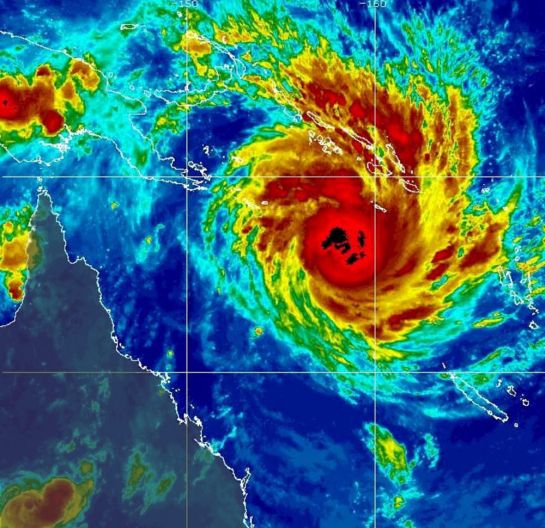
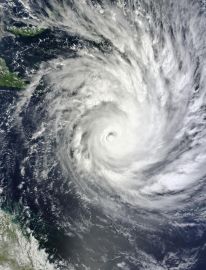
Yasi is two hours from hitting Townsville, northern Queensland, from the northeast. Yasi was upgraded to a maximum category 5 storm and is bearing down on urban areas where 400,000 people live.
A report by Reuters quoted Alan Sharp, national manager of the tropical cyclone warning services, Australian Bureau of Meteorology, as saying that the current La Nina was "helping drive the record ocean temperatures around Australia that were helping fuel Yasi by providing abundant heat and moisture".
The report said that La Nina events historically brought floods and more cyclones in the storm season between November and April in Australia.
"We can't say any particular cyclone is caused by climate change. There has been a slight trend towards more intense storms around the world," Sharp said, adding it was hard to figure out what was natural variability or climate change.
He told Reuters that if it maintained its current intensity when it crossed the coast, it would be the strongest cyclone to hit Queensland since 1899. "The March 1899 cyclone struck a pearling fleet in Bathurst Bay on Cape York Peninsula, killing more than 300 people in Australia's deadliest storm."
According to the report, "Scientists say there is a likely climate change link to the current La Nina through higher sea surface temperatures. The world's oceans and atmosphere have steadily warmed over recent decades and that warmth could be providing monsoons and storms with an extra kick. A major global study in 2010, based on complex computer modelling, found that tropical cyclones will become stronger, with the intensity increasing between 2 and 11 percent by 2100.
"And while in some regions, such as the western Pacific and around Australia, the average number of storms might decrease, the number of intense storms in the category 4 and 5 range will increase, along with wind speeds and the amount of rainfall."