


Goodwave 2013
Thur 7 March 2013 The six-month window for the Quiksilver Goodwave is open, and 32 invited surfers are standing by for a call indicating an epic day of perfect waves. This is not an easy task, which is why Spike from Wavescape has been roped in to assist.
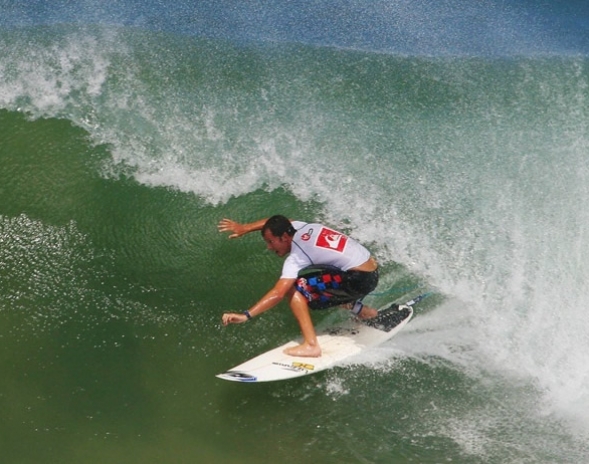
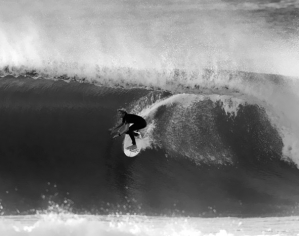
The 32 high profile invited surfers for this year's edition of the event have also been announced and can found on the events website at Goodwave.co.za. Assisting with the selection of this years competitors were World Tour surfer Travis Logie, surf photographer and Zigzag assistant editor Alan Van Gysen as well as surf journalist Craig Jarvis. South Africa's most controversial surf personality Warwick Wright was also called up to assist in the selection process.
The Quiksilver Goodwave is a unique invitational surfing event held between the Durban piers, the event has a waiting period of 6 months, from 1 March to 31 August 2013, and will only go ahead should the forecast point to a day of pumping surf in the allocated period. Event organizers will be working closely with legendary surf forecaster Spike from Wavescape for their information, hoping that he will be able to predict a great day to surf the event.
"The Quiksilver Goodwave is a great event to work on because it presents a unique surf forecasting challenge. Not only do you call swell height and direction, but you need to determine the quality and power of the swell, whether it's spaced out or frequent. Big east swells can pound the beachfront and turn it into a thumping, sandy mess. You want a perfect confluence of a smooth, spaced out swell, some southeast in the direction for it to wrap onto the piers, perfect offshore winds, and to top it off, the influence of a timed low tide at a certain point during the event," said Spike from Wavescape.
It is not the “Big Wave” or the “Perfect Wave" event, it is an event designed to see South Africa’s best surfers blowing up in good waves on the Golden Mile.
It is not the “Big Wave” or the “Perfect Wave" event, it is an event designed to see South Africa’s best surfers blowing up in good waves on the Golden Mile. Four-man 30-minute heats will take to the water at one of the three selected venues: New Pier, North Beach or the Bay of Plenty. The venue will be determined by the swell size, wind direction and quality of the sand banks at the time.
Jet-ski assistance will be used to ferry competitors back out to the take off zone in order to maximize the amount of waves ridden in the allotted 30-minute period. A panel of experienced judges will be scouting for a variety of solid maneuvers and good tube riding. The winner will receive R15 000 for his efforts with a total of R25 000 on offer but it is the good, clean, solid conditions with only three other competitors in the water that the surfers most look forward to.
Former winners Shane Thorne (Cape Town), Simon Nicholson (Durban), Warwick Wright (Durban) and Antonio Bortoletto (Durban) have all been listed to compete in this years' edition of the event. Big wave chargers Grant 'Twiggy' Baker (Durban), Josh Redman (Durban) and Matt Bromley (Cape Town) as well as young ripper Slade Prestwich (Durban) have also all found themselves on the list. Greg Emslie and Devyn Mattheys of East London will join the south coast trio of Casey Grant, Gavin Roberts and Frankie Oberholzer on their way up the coast when the event runs.
The Quiksilver Goodwave is one of the most anticipated events on the calendar and event organisers hope that it all falls into place this year. "The Goodwave has become increasingly difficult to run over the past few years, the harbour pier has been extended preventing a lot of good south swells from coming into the Durban bay, however, there are still good swells that can produce amazing surf, we just hope that when the swell does come all of the other elements come into line as well, " said Quiksilver's marketing manager Dane Patterson.
The Quiksilver Goodwave is presented by Zigzag and is sanctioned by Surfing South Africa. For more information and a full list of competitors go to: www.goodwave.co.za
The 32 selected surfers for 2013
Antonio Bortoletto (Durban), Beyrick de Vries (Umhlanga), Brandon Jackson (Durban North) Brendon Gibbens (Cape Town), Casey Grant (Scottburgh) Chad du Toit (Durban), Chris Leppan (Umhlanga), Dale Staples (St Francis), Dan Redman (Durban North), David van Zyl (Durban), David Weare (Durban), Devyn Mattheys (East London), Frankie Oberholzer (Warner Beach), Gavin Roberts (Scottburgh), Grant Baker (Durban), Greg Emslie (East London), Jason Ribbink (Durban), Josh Redman (Durban North), Lyle Bottcher (Durban), Matt Bromley (Cape Town), Michael February (Cape Town), Paul Canning (Durban), Ricky Basnett (Durban), Royden Bryson (Cape Town), Rudy Palmboom (Durban), Ryan Payne (Cape Town), Sean Holmes (Cape Town), Shane Thorne (Cape Town), Shaun Joubert (Mossel Bay), Simon Nicholson (Durban), Slade Prestwich (Durban), Warwick Wright (Durban).
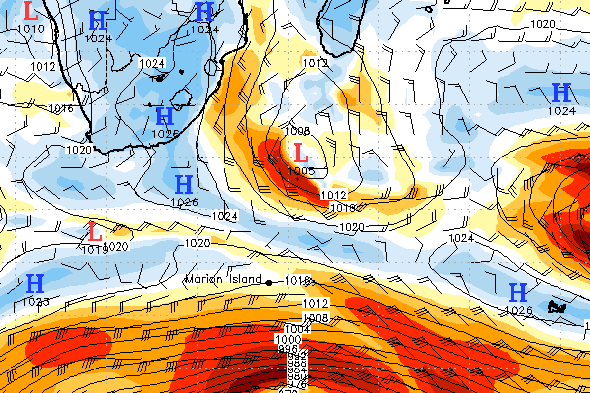
0800 on Tuesday 22 April 2008. The event ran the next day.
A bit extra on calling good surf in Durban
Calling good surf for the Durban beachfront is not easy. Calling an epic day is downright difficult. Surf forecasting tools don’t necessary give you parameters like “quality”, “consistency” or "frequency". Basically, you’re deciphering variables like swell height, swell period and swell direction, overlaid by wind direction and velocity. Throwing all this together to extrapolate an epic day of surfing, you might as well throw bones and burn incense.
How on earth do you take x variable and y factor and come out with perfectly formed 4-6’ lines coming in straight, and clean, and tubing metonymically across the sandbar for epic barrel rides to a cacophony of hooting from the shore and along the pier? Fortunately, there are other tools. For me, the single most valuable tool for forecasting Durban is the synoptic chart. Yes, that old-fashioned contour map of air pressure out to sea.
Reading storm movement and wind behaviour before the swell arrives is the key. By looking at the root, the source of all the end data before the numbers get crunched is an aid to hard-to-know variables like quality and consistency. Where is the storm that is going to create the swell? Maybe it's 100 miles SE of Durban with a fetch of just 200 miles. Mmm. A little short. What is the wind intensity? 60kts? But it only pumps for 6 hours, tho it's galeforce for 6 hours either side. What does it mean? How do you extrapolate this to the actual swell at the end point? What, you think i was going to tell you?